
|
🏡 Bunnies 101: Housing & Setup
Creating a safe, enriching space for your rabbit to thrive. 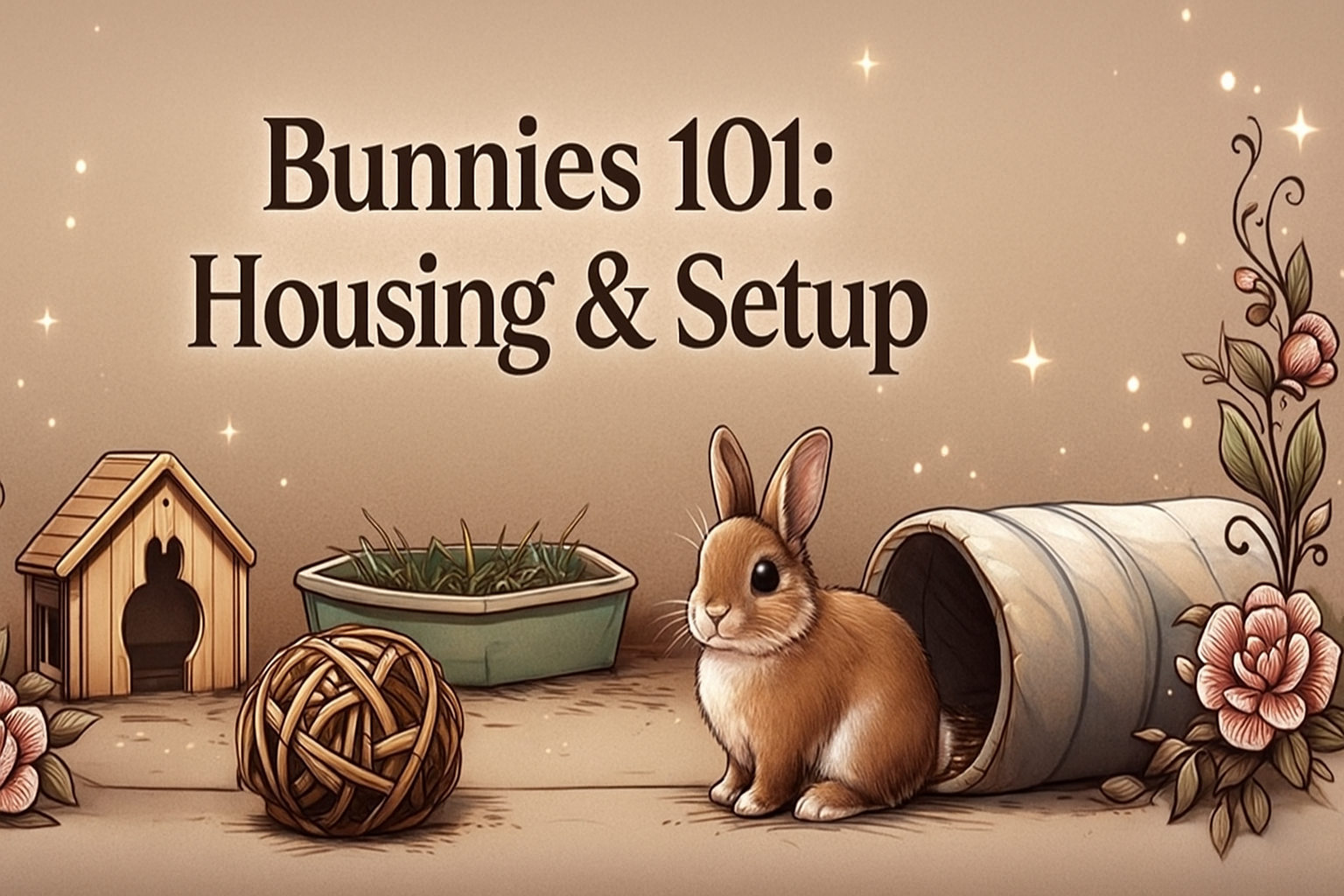 Here’s everything your bunny needs to feel safe, comfortable, and loved in their home. ⸻ 🌿 1. Minimum Space Requirements Rabbits are not cage animals — they’re built to hop, stretch, explore, and run. Traditional hutches are usually far too small. Recommended living space: ✔ Ideal Setup • Exercise Pen (X-pen) • 4 ft x 4 ft minimum • 4 ft x 6 ft is even better • Allows hopping, stretching, zooming • Easy to clean & customize • Budget-friendly ✔ This is why pens work best: • More freedom = less aggression • Encourages healthy movement • Prevents muscle loss • Helps maintain GI motility • Creates a calmer, friendlier bunny You can combine a hutch with a pen — using the hutch as a “bedroom” inside a larger safe space. ⸻ 🏠 2. Flooring Choices Rabbits have delicate feet and can easily develop sore hocks. Choose: • Solid flooring • Rug squares • Fleece blankets • Yoga mats • Grass mats • Rubber-backed runner rugs Avoid: • Wire flooring • Slippery surfaces • Bare tile with no traction ⸻ 🐾 3. Litter Box Setup A good litter setup = less mess, better hygiene, and easier cleanup. What to use: • Large cat litter box or low-entry rectangular bin • Paper-based pelleted litter (Yesterday’s News, Oxbow, etc.) • A big pile of hay on one side (rabbits LOVE to eat while they go) What to avoid: • Clay litter • Clumping litter • Pine/cedar shavings • Scented anything Rabbits naturally learn fast — a well-placed litter box makes training easy. ⸻ 🍃 4. Hay, Food & Water Setup Your bunny’s habitat should always have: ✔ Unlimited grass hay • Timothy • Orchard grass • Meadow hay • Oat hay (as a treat) Hay helps: • Gut motility • Dental wear • Emotional comfort • Natural foraging ✔ Fresh water • Heavy ceramic bowl preferred • Bottles only if needed (not ideal) ✔ Food area • Heavy ceramic dish • Easy-access space • Well away from litter box ⸻ 🐇 5. Hideouts & Comfort Spaces Rabbits need a safe, quiet place to retreat. Great hide options: • Wooden hide boxes • Foldable fabric tunnels • Cardboard houses • Ikea Duktig doll bed • Small pet wooden “bunk beds” • Repurposed small hutches inside a pen Avoid: • Fully enclosed plastic houses with no ventilation • Tiny hideouts with no room to turn around ⸻ 🎉 6. Enrichment & Toys Bunnies LOVE to chew, dig, and explore. Enrichment prevents boredom and destructive behaviors. Try: • Willow balls • Cardboard tunnels • Apple sticks • Forage boxes • Dig bins (soil-free, safe fillers) • Paper towel rolls stuffed with hay • Snuffle mats • Timothy hay cubes • Treat puzzles Rotate toys every few days to keep things exciting. ⸻ 💛 7. Safe, Bunny-Proofed Play Area If your bunny gets free-roam time: Protect your space: • Hide or secure cords • Block under furniture • Remove toxic plants • Keep floors non-slip • Keep small objects off the floor A safe play area = a confident, social bunny. ⸻ 🧽 8. Cleaning & Maintenance Keep your bunny healthy with simple upkeep: • Spot-clean daily • Dump litter every 1–2 days • Wash food/water bowls daily • Clean fleece/rugs weekly • Deep clean habitat every 1–2 weeks A clean space dramatically reduces odor, flies, and infections. ⸻ 🌸 9. Temperature & Environment Rabbits are sensitive to heat. Ideal temp: 60–70°F (15–21°C) Avoid: • Direct sunlight • Loud environments • Drafts • Heaters • Overheating in summer ⸻ 🌈 10. Make It Your Bunny’s Safe Haven Your rabbit’s setup is more than just a habitat — it’s their sanctuary. When they feel safe and comfortable, they’re: • calmer • more affectionate • more confident • healthier • and much happier A thoughtful setup now prevents emergencies later. |
|
|
Softly Bred, Deeply Loved |
     | Privacy Policy |