Is a Bunny the Right Pet for Me?
Bringing home a Holland Lop is magical, but rabbits are often misunderstood pets. Before adding a bunny to your family, take a few moments to make sure a rabbit is truly the right fit for your lifestyle.
Before You Bring Home a Bunny
Ask yourself these questions before bringing home your Setareh Holland Lop:
🐰 Daily Time
Do you have time every day for feeding, fresh water, cleaning, exercise, enrichment, and social interaction?
🐰 Veterinary Care
Are you prepared to establish care with an exotic veterinarian and consider spay or neuter when age-appropriate?
🐰 Not a Starter Pet
Do you understand that rabbits need daily care, gentle handling, and adult supervision with young children?
🐰 Proper Diet
Can you provide unlimited grass hay, quality pellets, fresh water, and appropriate greens to support digestive health?
🐰 Other Pets
If you have dogs, cats, or other animals, are you prepared for slow, supervised introductions and safe spaces?
🐰 Vacation Plan
Do you have someone reliable who can feed, check on, and care for your bunny if you travel?
🐰 Household Agreement
Is everyone in your home supportive of adding a bunny and committed to their long-term care?
🐰 Allergies
Has your family spent time around rabbits or hay to make sure there are no major allergy concerns?
Our Honest Recommendation
If you can confidently answer 🐰Yes!🐰 to these questions, a Holland Lop may be a wonderful addition to your family.
At Setareh Holland Lops, we believe rabbits are not just pets they are companions, family members, and tiny souls with unique personalities.
✨ A well-prepared family creates a confident, happy bunny.
5 Fun Bunny Facts Every Owner Should Know
🐰 Fact #1
Bunny Teeth Never Stop Growing
A rabbit's teeth grow continuously throughout their life. Unlimited hay, safe chew toys, untreated wood, and cardboard help keep those teeth naturally worn down and healthy.
🐰Fact #2
Their Digestive System Is Unique
Rabbits have a very sensitive digestive system and cannot vomit like cats or dogs. Unlimited hay and proper nutrition help keep their digestive tract moving normally.
🚑 Fact #3
Not Eating Is An Emergency
One of the most serious conditions rabbits can experience is GI Stasis. If your bunny suddenly stops eating, becomes lethargic, hides, or refuses favorite treats, contact a rabbit-savvy veterinarian immediately.
🐰Fact #4
Rabbits Are A Long-Term Commitment
Holland Lops commonly live 8โ€“12 years with proper care. Bringing home a bunny is not a short-term decisionโ€”it's a commitment that can last over a decade.
🐰Fact #5
One Bunny Can Be Perfectly Happy
Rabbits do not require another rabbit to live a happy life. Many thrive as single pets when they receive plenty of daily interaction, enrichment, and attention from their families.
The Scoop on Poop 💩
It might not be the most glamorous bunny topic, but monitoring your rabbit's droppings is one of the most important ways to keep them healthy.
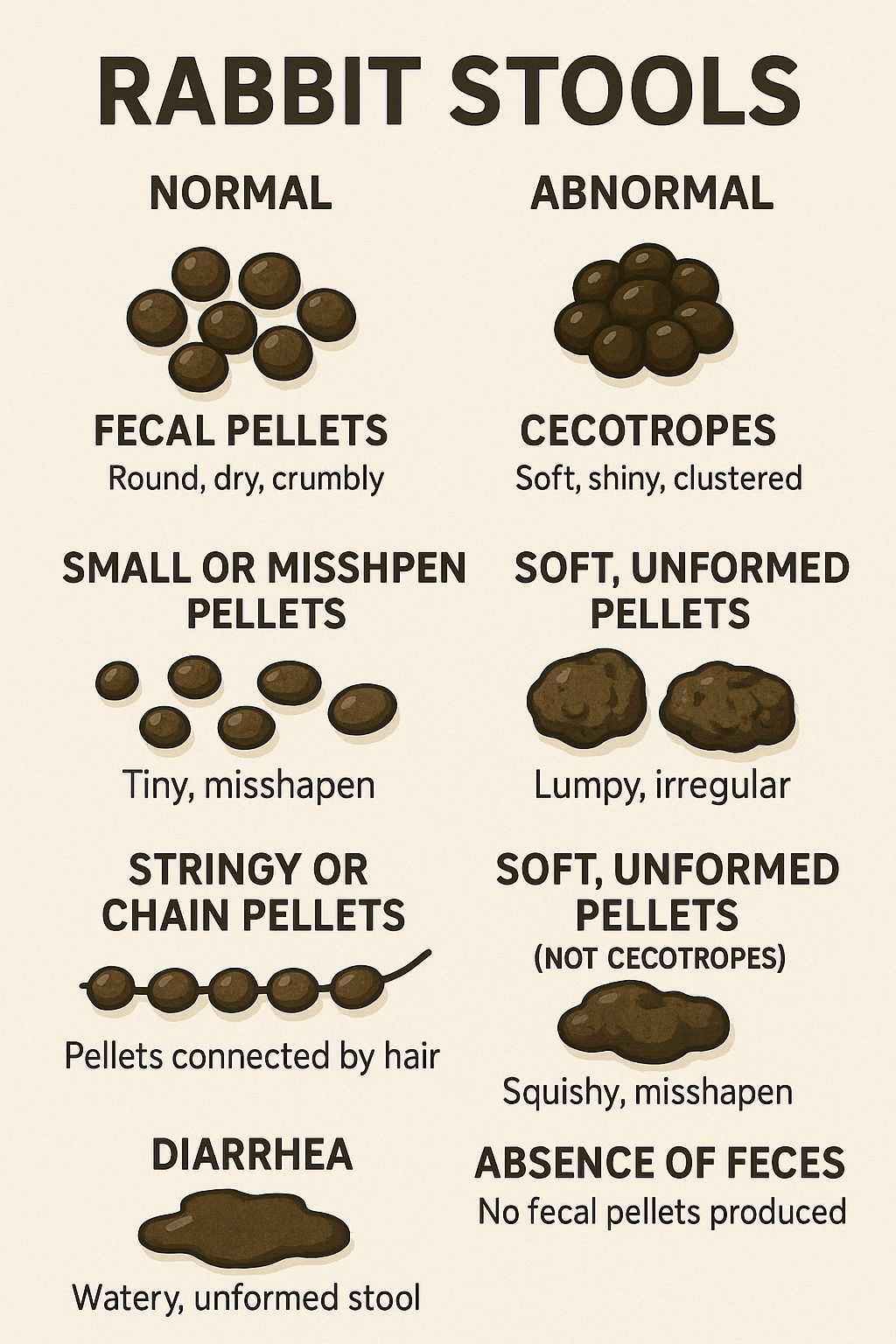
Two Types of Bunny Poop
Rabbits produce two different kinds of droppings:
- Fecal Pellets โ€“ The dry round droppings you normally see in the litter box.
- Cecotropes โ€“ Soft, shiny clusters that look similar to tiny grapes.
Cecotropes are completely normal and are an important part of your bunny's digestive health. Rabbits are hindgut fermenters and re-eat these nutrient-rich droppings, similar to how humans benefit from probiotics.
Most rabbits consume their cecotropes overnight, so many owners never actually see them. Occasionally you may find a few left behind or accidentally stepped on.
If you begin seeing excessive cecotropes throughout the enclosure, it may indicate a dietary imbalance and is worth discussing with your rabbit-savvy veterinarian.
⚠️Diarrhea Is An Emergency
True diarrhea is not the same as cecotropes.
If your bunny is producing stool that resembles watery toothpaste, has a foul odor, or is losing interest in food, this should be treated as a medical emergency.
While some mild digestive upset may improve with a temporary hay-only diet, diarrhea can also be an early sign of GI Stasis or another serious illness.
When in doubt, contact your rabbit-savvy veterinarian immediately.
Learn More About Bunny Poop & Digestive Health
A Sample Daily Bunny Routine
Rabbits thrive on consistency. Having a daily routine helps your bunny feel safe, confident, and healthy. Every family is different, but here's an example of what a typical day with a Holland Lop might look like.
Morning Care
Offer your bunny's daily pellets, refresh unlimited hay, and provide fresh water.
Encourage movement by allowing supervised free-roam time or exercise in a bunny-safe area before starting your day.
Rest & Exploration
If someone is home, allow supervised playtime and interaction throughout the day.
Rabbits enjoy exploring tunnels, cardboard boxes, toys, and enrichment activities.
Evening Feeding
Adult rabbits may enjoy a serving of rabbit-safe leafy greens.
Check pellet levels, refresh hay, provide fresh water, and clean the litter box as needed.
Playtime & Bonding
This is often a rabbit's favorite time of day. Allow plenty of exercise, exploration, and interaction with family members.
Many well-trained house rabbits enjoy supervised access to larger areas of the home during the evening.
Wind Down
Spend a few quiet minutes petting, talking to, or simply sitting with your bunny before bedtime.
Gentle daily interaction helps strengthen the bond between you and your rabbit.
🐰 When Do Rabbits Sleep?
Rabbits are crepuscular, meaning they are most active during dawn and dusk.
Their biggest naps typically happen during the middle of the day and late at night. Because of this, early mornings and evenings are often the best times for playtime, training, and bonding.
🐰 A bunny's favorite part of the day is usually the time spent with their people.
What Supplies Will I Need?
Preparing before your bunny comes home makes the transition smoother for both you and your new companion. Here are the basic supplies we recommend having ready before pickup day.
🐰 Housing
Large enclosure, exercise pen, or bunny-safe free roam area.
🐰 Water Bottle or Bowl
Fresh water should always be available.
🐰 Food Dish
A sturdy ceramic dish works best for pellets and greens.
🐰 Hay Rack
Or a simple toilet paper tube for enrichment and hay feeding.
🐰 Grooming Supplies
A soft brush and nail trimmers for routine care.
🐰 Litter Box
Essential for litter training and keeping your bunny's space clean.
🐰 Quality Hay & Pellets
Unlimited grass hay and a quality pellet are the foundation of a healthy rabbit diet. We currently feed Small Pet Select hay.
🐰 Emergency Supplies
We recommend keeping Sherwood SARx Rescue Appetite Restore and infant gas drops on hand for emergencies while contacting your rabbit-savvy veterinarian.
What Treats Can I Feed My Bunny?
One of the most common questions new bunny owners ask is when they can start feeding treats and fresh greens. The answer depends on your bunny's age, digestive health, and how gradually new foods are introduced.
🐰Young Bunnies & Treats
The safest answer is very few treats until your bunny is older. Young rabbits have sensitive digestive systems that are still developing.
However, our Setareh babies are gradually introduced to small amounts of bunny-safe greens while they are still with us. We believe early, controlled exposure helps many rabbits become more accepting of fresh foods later in life.
Once your bunny comes home, you may continue offering a thumb-sized amount of greens daily if your bunny is tolerating them well and producing normal droppings.
Quality pellets and unlimited hay are the only true dietary necessities.
🐰 Daily Greens
- Green Leaf Lettuce
- Red Leaf Lettuce
- Spring Mix (No Spinach)
- Kale
- Collard Greens
- Cilantro
- Parsley
- Basil
🐰 Natural Treats
- Dandelion Greens
- Dandelion Flowers
- Plantain Herb (Untreated Lawns)
- Old-Fashioned Oats (Very Small Amounts)
🐰Fruits (Occasional)
- Quarter-sized Banana Slice
- A Few Blueberries
- A Few Raspberries
- A Few Strawberries
🐰 Foods to Avoid
Avoid feeding large amounts of gas-producing vegetables such as:
- Cabbage
- Broccoli
- Cauliflower
Whenever introducing a new food, start with a tiny amount and monitor your bunny's droppings closely over the next 24โ€“48 hours.
🐰What Our Babies Are Introduced To
Before leaving for their forever homes, our babies are gradually introduced to:
- Green Leaf Lettuce
- Red Leaf Lettuce
- Spring Mix (No Spinach)
- Kale
- Cilantro
- Collard Greens
- Small Amounts of Carrot Shreds
We feel early exposure helps create confident eaters and can reduce challenges introducing healthy greens later in life.
Benefits of Spaying & Neutering Your Bunny
One of the most important health decisions you'll make as a rabbit owner is whether to spay or neuter your bunny. While every family should discuss the decision with their rabbit-savvy veterinarian, there are many benefits to the procedure.
🐰 Improved Litter Training
Rabbits naturally use urine and droppings to mark territory. Spaying and neutering often results in more reliable litter habits and fewer accidents.
🐰 Reduced Hormonal Behaviors
Many rabbits become calmer after surgery. Behaviors such as spraying, excessive digging, territorial behavior, and moodiness are often greatly reduced.
🐰 Health Benefits
Spaying female rabbits significantly reduces the risk of reproductive cancers and other reproductive health problems later in life.
🐰 Easier Bonding
Altered rabbits are often much easier to bond with other rabbits and generally experience fewer territorial conflicts.
🐰 More Relaxed Companion
Many owners find their bunny's affectionate and cuddly personality returns once hormones settle following surgery.
🐰 Prevents Unplanned Litters
Rabbits can reproduce incredibly quickly. A single accidental encounter can result in a pregnancy, making prevention extremely important.
What About Surgery Risks?
Every surgical procedure carries some level of risk. However, when performed by an experienced rabbit-savvy veterinarian, spay and neuter surgeries are generally considered very safe and are commonly performed.
We strongly recommend discussing pain management and post-operative care with your veterinarian before surgery.
Choosing an experienced rabbit veterinarian is one of the most important factors in ensuring a smooth recovery.
🐰 When Should My Bunny Be Spayed or Neutered?
Most rabbit-savvy veterinarians recommend spaying or neutering between 5 and 6 months of age, although timing can vary depending on your bunny's size, development, and your veterinarian's recommendations.
If you're unsure when your bunny is ready, schedule a wellness exam and discuss the best timing with your veterinarian.
Learn More About Rabbit Bonding & Reproduction
Watch the video below to learn more about rabbit bonding, reproduction, and why preventing accidental litters is so important.
Bunny Behaviors 101
Rabbits may not speak our language, but they are constantly communicating. Learning bunny body language can help you better understand your rabbit's emotions, needs, and personality.
🐰 Binky
The famous bunny happy dance! A binky is when your rabbit jumps into the air, twists, kicks, or spins unexpectedly. It may look silly, but it's one of the biggest signs your bunny is feeling joyful and confident.
🐰 Flop
One moment they're standing, the next they've dramatically fallen onto their side. A flop usually means your bunny feels safe, relaxed, and completely comfortable in their environment.
🐰 Thumping
Rabbits thump their powerful back feet to communicate frustration, annoyance, fear, or concern. Sometimes they're warning you about something. Other times they're simply expressing their opinion about your choices.
🐰 The Silent Treatment
If your bunny turns their back to you, they may be expressing displeasure. Whether it's because playtime ended too soon or dinner was late, rabbits are surprisingly good at holding tiny grudges.
🐰 Tooth Purring
During gentle petting, you may notice a soft grinding or chewing motion. This is often called tooth purring and is one of the best signs that your bunny is content and enjoying your attention.
🐰 Growling & Lunging
Some rabbits become protective of their enclosure, especially during adolescence or when hormones are active. This behavior is often greatly reduced after spaying or neutering and with gentle trust-building over time.
🐰 Mounting
Mounting is a normal rabbit behavior and can occur with both males and females. Hormones often increase the behavior, which is one reason many owners choose to spay or neuter.
🐰 Spraying
Unaltered rabbits may spray urine to mark territory or attract a mate. Neutering or spaying typically reduces or eliminates this behavior.
🐰Every Bunny Has Their Own Personality
Some rabbits are outgoing and adventurous. Others are quiet observers who prefer affection on their own terms. Learning your bunny's unique communication style is one of the most rewarding parts of rabbit ownership.
The more time you spend with your bunny, the more you'll discover just how expressive they truly are.
Will a Bunny Get Along With Dogs & Cats?
One of the most common questions we receive is whether rabbits can successfully live in a home with dogs and cats. The answer is often yesโ€”but introductions should always be done slowly and thoughtfully.

🐰 Remember: Rabbits Are Prey Animals
Even the gentlest dog or cat may seem intimidating to a rabbit at first. Rabbits are naturally wired to be cautious around animals they perceive as predators.
We recommend giving your new bunny several days to settle into their new environment before beginning introductions to other pets.
Start introductions from a distance and watch your bunny's body language carefully. If your bunny appears stressed, frightened, or overwhelmed, slow down and give them more time.
🐰 Provide Safe Spaces
Every bunny should have access to a secure hiding place. Cardboard boxes, tunnels, hide houses, and covered spaces help rabbits feel safe when they become nervous.
🐰 Create Multiple Hideouts
We recommend placing hiding spots in every area where your bunny spends time. This gives them a safe retreat whenever they need one.
🐰 Supervise Introductions
Never leave a newly introduced rabbit and another pet unsupervised. Even playful behavior from a dog or cat can accidentally injure a rabbit.
🐰Consider Vertical Space
In some homes, keeping your bunny's enclosure elevated or providing raised hiding areas can help them feel more secure around other pets.
🐰 Always Have a Plan B
While many rabbits successfully coexist with dogs and cats, every animal is different.
It's important to have an alternative setup available if introductions don't go as planned. This might be a spare bedroom, office, laundry room, basement, or another quiet area of the home where your bunny can feel safe and relaxed.
Your bunny's comfort and safety should always come first.
🐰 Can Bunnies Play Outside?
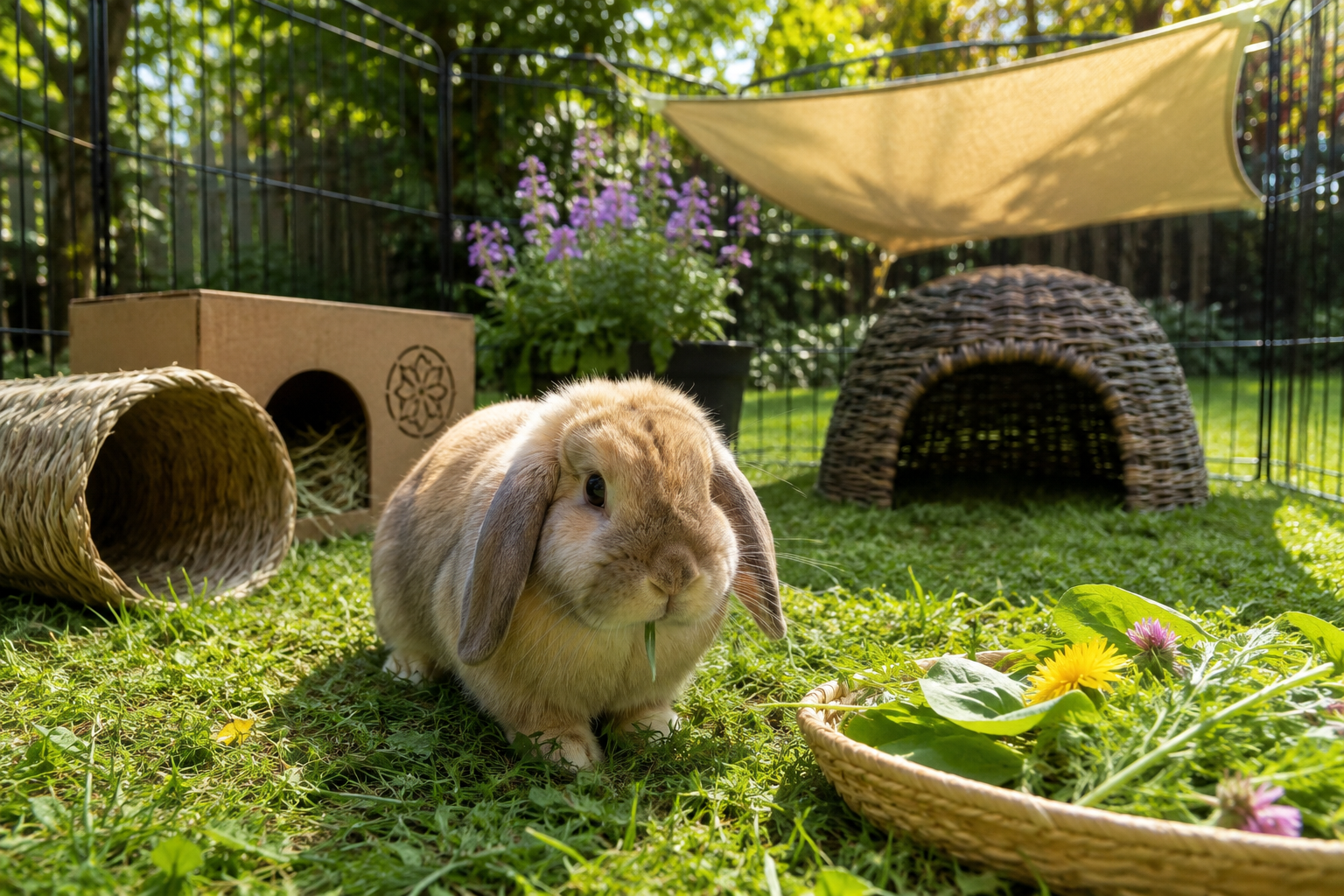
Yes! Many bunnies enjoy supervised outdoor playtime, but there are a few important safety considerations.
🐰 Temperature Matters
Heat is extremely stressful for rabbits and can quickly become life-threatening. Outdoor play should only happen during mild weather, ideally between 45ยฐFโ€“80ยฐF.
🐰 Provide Shade
Always provide shade and at least one hiding area such as a tunnel, box, or small shelter. Rabbits feel safest when they have a place to retreat.
🐰 Safe Exercise Area
A dog exercise pen that is at least 30 inches tall works wonderfully. A covered patio, porch, or partially shaded yard is ideal.
🐰 Chemical-Free Grass Only
Never allow your bunny on grass that has recently been treated with fertilizers, weed killers, or pesticides. Organic lawns are safest.
🐰 Watch for Predators
Hawks, dogs, cats, raccoons, and other predators can pose a danger. Never leave your bunny unattended outside.
🐰 Exercise Time
Most rabbits only need about 1โ€“2 hours of outdoor exercise. Quality supervised playtime is more important than long periods outside.
🐰 Does My Bunny Need a Friend?

Don't be fooled by the adorable photos online of two rabbits cuddling and grooming one another. While bonded pairs can be wonderful, those relationships often take weeks or even months of careful introductions and bonding sessions to achieve.
🐰 One Bunny Can Be Happy
Many rabbits are perfectly content living as single pets when they receive plenty of daily interaction, enrichment, exercise, and attention from their family.
🐰 Rabbits Are Territorial
Rabbits naturally like having their own space. Introducing another rabbit requires patience, proper bonding techniques, and usually spaying or neutering first.
🐰 Hormones Matter
Intact rabbits are far more likely to fight, spray, mount, and display territorial behaviors. Spaying and neutering greatly improves bonding success.
🐰 Thinking About Two?
We recommend starting with one bunny, having them spayed or neutered, and then considering a second rabbit later if you'd like to pursue a bonded pair.
🐰 Our Recommendation
For most families, especially first-time rabbit owners, one bunny is the perfect place to start.
If you later decide you'd like a bonded pair, be prepared to provide separate housing during introductions and have a backup plan if bonding isn't successful.
A happy bunny doesn't necessarily need another bunnyโ€”they need love, enrichment, and a family committed to their care.